
Richmond does not have to work very hard to look haunted.
Wait until the sun goes down and take a walk through one of the city’s older neighborhoods. Brick sidewalks wind past buildings that have stood for generations. Iron fences cast long shadows beneath old trees. Narrow streets disappear between nineteenth-century houses. In Shockoe, cobblestones and old warehouses recall a city built around commerce and the James River. On Church Hill, some streets still feel remarkably removed from the modern city only a few blocks away.
Then there are the stories… Richmond has accumulated an extraordinary collection of tales about unexplained footsteps, mysterious figures, strange voices, lingering former residents, and buildings where something simply does not feel quite right.
Some of those stories have been told for generations. Others are surprisingly recent. Some can be connected to documented historical events. Others live almost entirely in the world of folklore.
So why does Richmond seem to have so many ghost stories? The answer may have less to do with ghosts than with history, memory, and a city that has been accumulating both for centuries.
Richmond Was Old Before It Was Richmond
The story begins long before anyone called this place Richmond.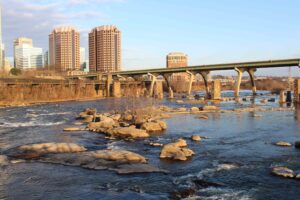
The falls of the James River created a natural meeting point. Below them, oceangoing vessels could travel upriver. Above them, the river became a different kind of transportation route. Long before English colonization, Indigenous communities occupied and traveled through the region. Powhatan, an important Indigenous settlement, stood near the falls, and English explorers were showing interest in the area as early as 1608.
The Richmond that developed during the colonial period took advantage of that same geography. The city’s earliest street grid was laid out in 1737, and Shockoe became the center of its early commercial and industrial activity. The river, warehouses, tobacco trade, mills, canals, roads and eventually railroads helped transform a relatively small settlement into an important city, compressing generations of human experience into a very small area.
Walk a few blocks in Richmond and it is possible to cross landscapes associated with Indigenous history, colonial settlement, the tobacco economy, slavery, the American Revolution, industrialization, the Civil War, Reconstruction and the growth of the modern city.
Some of those histories are deeply uncomfortable, but difficult history has a way of leaving stories behind.
A City That Has Known Its Share of Tragedy
Ghost stories often grow around moments when normal life is suddenly interrupted, and Richmond has experienced plenty of those.
One of the most devastating events occurred on December 26, 1811, when Richmond’s theater caught fire during a performance. Seventy-two people died, including Virginia governor George William Smith. The disaster shocked the nation and became one of the defining tragedies of its era. But it was hardly the city’s last encounter with catastrophe…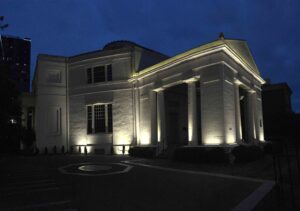
Richmond endured floods, disease, industrial accidents and fires as it expanded through the nineteenth and early twentieth centuries. Then came the Civil War, when Richmond served as the capital of the Confederacy and became home to military hospitals, prisons, government offices and industries supporting the war effort.
In April 1865, as Confederate authorities evacuated the city, fires set during the withdrawal spread through the commercial district. When Union troops entered Richmond on April 3, portions of the city were in ruins. Shockoe Slip, today one of Richmond’s best-known historic neighborhoods, was among the devastated areas and was quickly rebuilt.
While none of that proves that Richmond is haunted, it does give generations of Richmonders a collection of dramatic events to remember, retell and eventually transform into folklore.
Some Richmond History Is Literally Beneath Our Feet
There is another layer of the city’s history that deserves particular care. Richmond contains numerous historic cemeteries and burial grounds, including places that were forgotten, obscured or built over as the city changed.
The Shockoe Bottom African Burial Ground, for example, served enslaved and free people of African ancestry around the turn of the nineteenth century. A later burial ground on Shockoe Hill became an enormous resting place for free and enslaved people of color. Much of that landscape was subsequently altered as the city developed around it.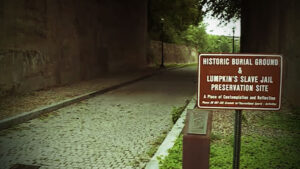
These places should not be looked at as mere spooky scenery. They are sacred landscapes connected to real people whose lives and deaths deserve considerably more respect than a convenient ghost story.
They also illustrate something important about Richmond. The modern city and the historical city frequently occupy the same physical space.
Buildings disappear. Streets change names. Neighborhoods are rebuilt. Cemeteries vanish from maps. Industrial buildings become apartments. Private homes become offices. A location can change purpose repeatedly while retaining pieces of everything that came before.
Sometimes Richmonders know exactly what happened in those places. Sometimes they rediscover it generations later. Sometimes a story fills the space in between…
Richmond Has Kept Much of Its Historical Atmosphere
Another reason Richmond produces so many ghost stories may simply be that so much of its past remains visible.
Church Hill preserves a substantial collection of nineteenth-century architecture around one of the city’s oldest neighborhoods. Shockoe still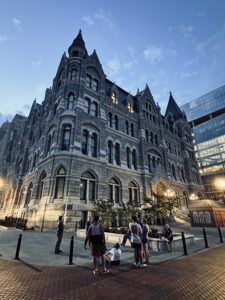 contains brick commercial buildings and streets reflecting its long history as a center of trade and industry. West of downtown, entire neighborhoods preserve houses from Richmond’s dramatic expansion during the late nineteenth and early twentieth centuries.
Some of Richmond’s buildings practically invite ghost stories…
- Old City Hall, completed in 1894, rises beside Capitol Square in elaborate High Victorian Gothic style.
- Church Hill contains everything from Greek Revival and Italianate buildings to Gothic Revival and Second Empire architecture.
- Elsewhere, Richmond offers Egyptian Revival, Victorian mansions, industrial warehouses and old institutional buildings that have survived while the city around them changed.
Architecture matters to folklore. A story about a long-dead Richmonder feels different when the house where that person lived is still standing in front of you. A Civil War story feels different when you are standing on the same street. An account of something unexplained becomes a little more compelling when the building above you has been watching Richmond change for over 150 years.
And perhaps that is one reason walking tours and ghost stories fit together so naturally here. Richmond has retained much of the scenery.
History and Folklore Do Not Always Agree
Of course, old cities also accumulate something else: bad information.
Stories change every time they are told. Names get confused. Dates shift. Two unrelated events become connected. A dramatic detail appears somewhere along the way and becomes inseparable from the story. A newspaper repeats a rumor. A family tradition becomes local history. An unexplained experience acquires a backstory years after it supposedly occurred.
Eventually, determining where documented history ends and folklore begins can become surprisingly difficult, but that does not necessarily make the folklore worthless.
Folklore tells us something about the people who repeat it. The stories a community preserves reveal the places, tragedies and anxieties that generations of residents have considered worth remembering. But history and folklore are not the same thing.
At Haunts of Richmond, that distinction matters.
A good ghost story does not need to be presented as proven fact to be worth telling. Sometimes the uncertainty is what makes it interesting. There is room to say that a historical event is documented, that a supernatural story appeared much later, or simply that no one knows exactly how a particular legend began.
After all, admitting what we do not know leaves room for a very interesting question. “What if?”
Every Richmond Neighborhood Tells a Different Kind of Story
Richmond’s haunted reputation is also difficult to separate from its neighborhoods.
Shockoe grew around commerce, warehouses, transportation and the river. Church Hill developed around some of Richmond’s earliest residential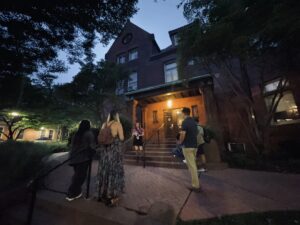 areas. Capitol Square became the center of political life. Franklin Street tells another story, filled with institutions, hotels and the homes of some of the city’s most prominent residents.
Each developed during a different chapter of Richmond’s history. Each attracted different people. And each accumulated different legends.
That is why there really is no single “Richmond ghost story.”
The supernatural folklore of the city reflects the same complicated patchwork as the city itself. Stories involve politicians and prisoners, wealthy families and working people, soldiers and physicians, writers and business owners, famous Richmonders and people whose names have nearly disappeared from the historical record.
Some stories are tragic. Some are unsettling. Some are surprisingly funny. And a few are so strange that even a skeptic has to admit they make for a very good evening’s entertainment.
So, Is Richmond Really Haunted?
That depends on whom you ask.
There is no historical document capable of proving that a mysterious figure seen in an old house is a ghost. An unexplained sound remains unexplained. A centuries-old legend does not become true simply because generations of Richmonders have repeated it. But perhaps asking whether every Richmond ghost story is literally true misses part of the point.
Richmond is a city where the past remains unusually close to the surface. People still live beside buildings constructed generations before they were born. They walk streets that have witnessed wars, celebrations, disasters, protests, commerce, crime, ordinary family life and extraordinary moments of history. They pass places whose original purpose has been forgotten and others where people have worked very hard to ensure that the past is remembered… That is fertile ground for stories.
And when night falls over old brick streets, the modern city becomes a little quieter, and someone begins telling one of those stories, several centuries of Richmond history suddenly do not feel very far away at all.
Whether any of its former residents are still hanging around is another question. That is where the ghost stories begin…
Interested in hearing some of those stories for yourself? Explore Haunts of Richmond’s historically researched ghost tours.
